
A mail attachment reaches a privileged inspection path
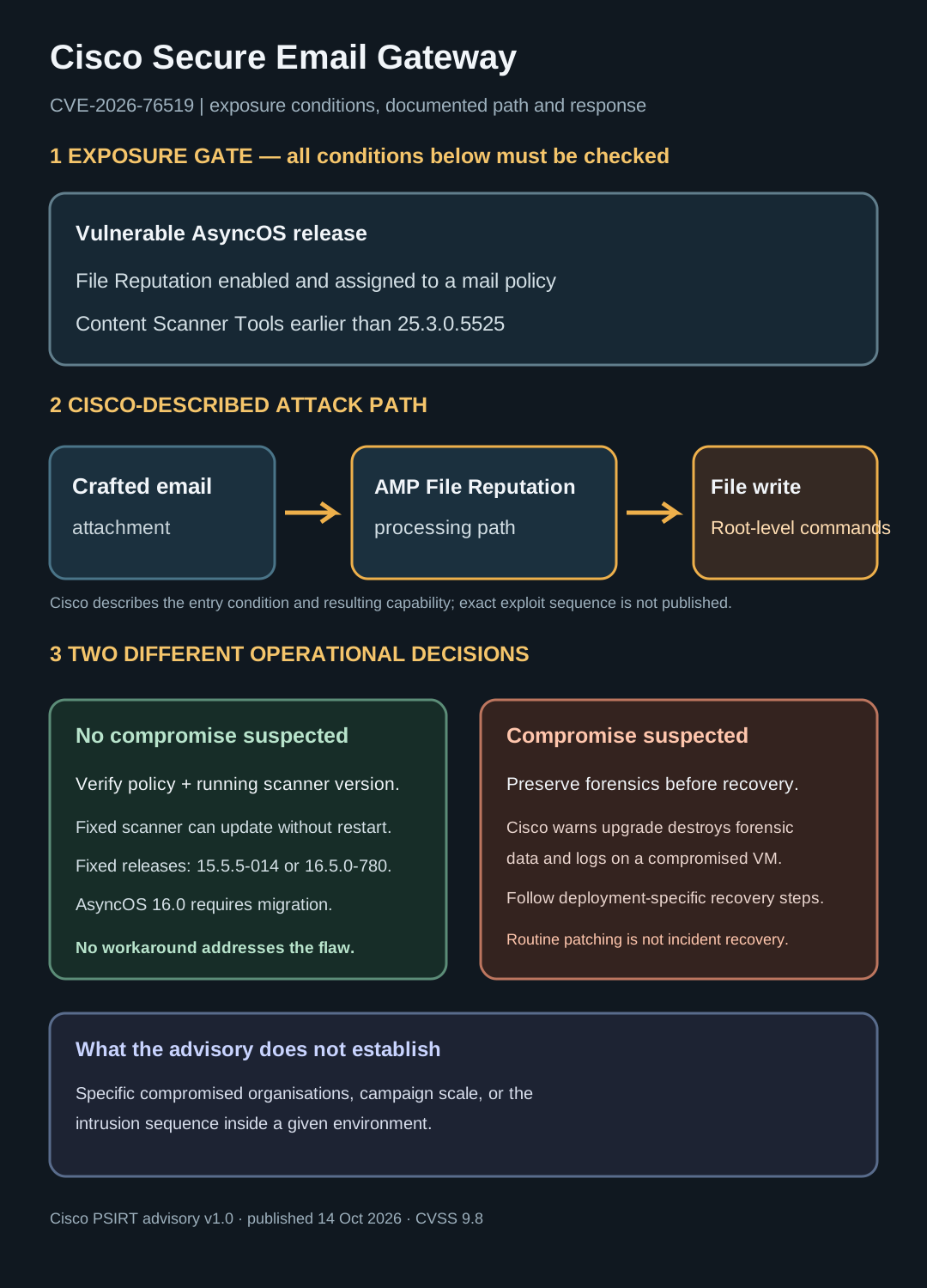
Cisco disclosed CVE-2026-76519 in Secure Email Gateway on 14 October 2026. The advisory describes improper handling of email attachments in the Advanced Malware Protection (AMP) File Reputation feature. A crafted attachment sent through an affected gateway could lead to arbitrary file writes and command execution with root privileges on the underlying operating system.
Cisco's stated affected condition combines a vulnerable AsyncOS release with File Reputation enabled and assigned to a mail policy, and Content Scanner Tools earlier than 25.3.0.5525. The scanner component therefore matters alongside the appliance's AsyncOS release. The advisory gives administrators a policy check and the contentscannerstatus command to establish the running scanner version.
Updating and recovering are different decisions
Cisco says the fixed Content Scanner Tools package can be applied without restarting the appliance. The advisory lists AsyncOS 15.5.5-014 and 16.5.0-780 as fixed releases; version 16.0 requires migration to a fixed release. Cisco says there is no workaround that addresses the vulnerability. For Secure Email Cloud, Cisco says its fixed scanner component is already deployed through the standard service process.
Confirmed exploitation changes the urgency of exposure checks, but it does not establish compromise in a particular environment. If compromise is suspected, Cisco warns that upgrading a compromised virtual appliance destroys forensic data and logs. Its guidance calls for preserving forensic information before recovery; for a compromised virtual deployment it recommends a new fixed virtual machine, rebuilding configuration without importing earlier configuration files, and renewing installed credentials and cryptographic material. For clustered appliances, Cisco recommends restoring each member when one compromised appliance may expose cluster SSH keys.
What is known, and what remains open
Cisco reports that its PSIRT became aware of active exploitation in October 2026. It also says it directly contacted Secure Email Cloud customers whose devices showed malicious activity. The public advisory does not state the number of affected organisations or document a complete intrusion sequence. A vulnerable configuration, an exploitation report and a confirmed compromise in one environment are different evidence states.
Primary source
Continue this decision.
Move from this analysis into a curated route across related incidents, evidence and operating constraints.