
CERT-FR reported on 12 October 2026 that it knows of numerous compromises affecting remote refrigeration controllers from Danfoss, Copeland and Dixell. Its alert was updated on 13 October to include additional targeted equipment. The agency warns that attack campaigns are probably still ongoing.
The confirmed issue is not a named universal vulnerability or a proven physical consequence. It is the exposure of management interfaces on the public Internet. CERT-FR names Danfoss AK-SM and AK-SC, Copeland xweb and Dixell xweb among the affected controller families.
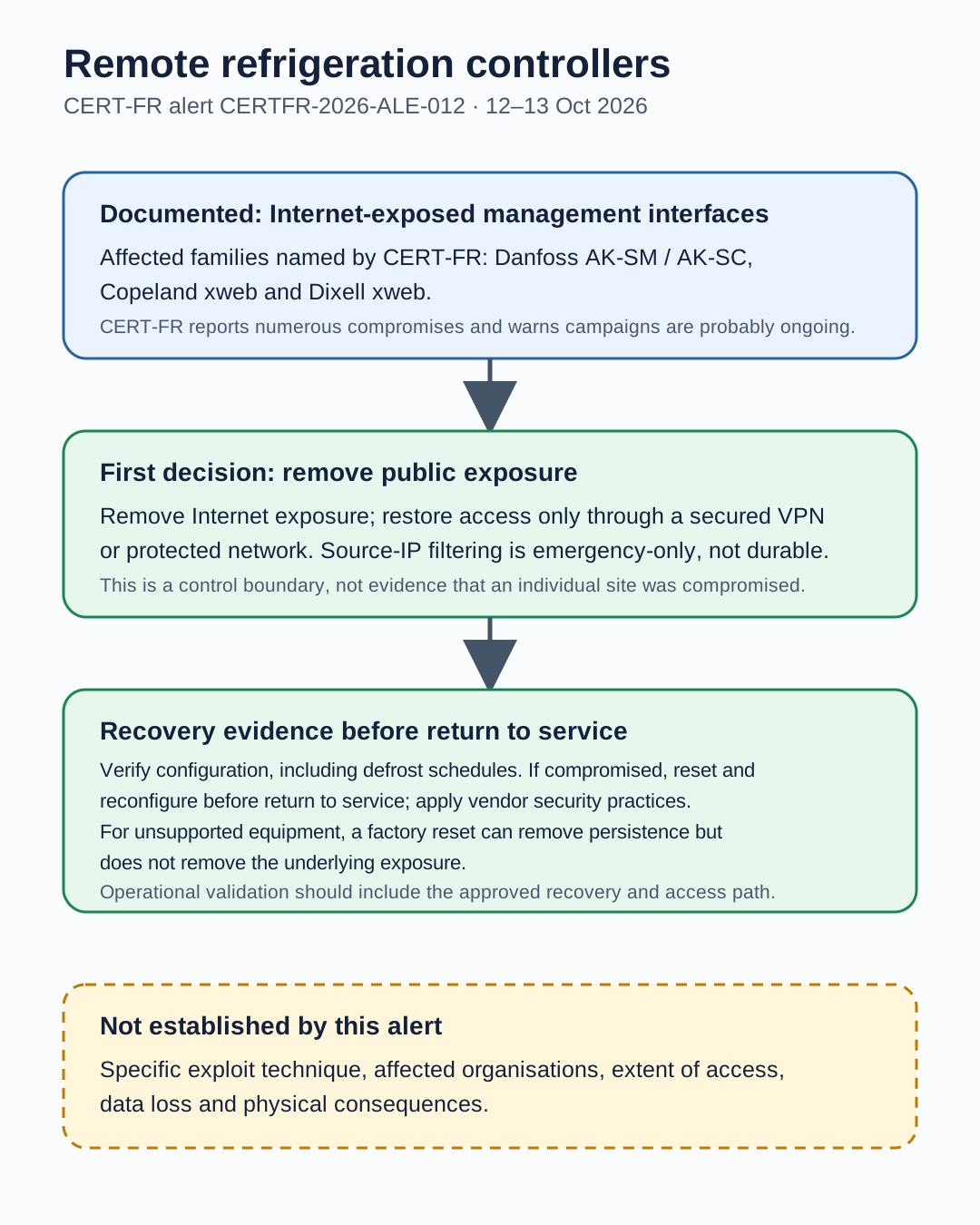
The immediate decision is therefore to remove public exposure while preserving a controlled route for legitimate service. CERT-FR recommends restoring access only through a secured VPN or protected network. In an emergency, source-IP filtering for a refrigeration provider may reduce exposure, but the alert says it is not a durable solution.
Recovery needs operational evidence as well as a network change. For equipment not known to be compromised, the alert calls for checking configuration, including defrost schedules. For compromised equipment, it calls for removal from exposure, a factory reset, reconfiguration and the vendor's security practices. Where equipment is end-of-life and cannot receive security fixes, a reset can remove persistence but leaves the exposure unresolved.
What remains unknown matters: the alert does not establish the exploit technique, the affected organisations, data loss or physical outcomes. That is why return to service should record the controller, exposure change, configuration validation and authorised recovery path rather than claim that a reset or a VPN alone proves safety.
Recheck this initial analysis if CERT-FR or the named vendors provide material new evidence about affected scope, compromise method or recovery guidance. A reported incident at a specific site would require separate evidence about that deployment and its consequences.
Primary source
- CERT-FR CERTFR-2026-ALE-012, published 12 October and updated 13 October 2026. Reported compromises, named controller families, exposure condition and response guidance.
Continue this decision.
Move from this analysis into a curated route across related incidents, evidence and operating constraints.